




Number №3, 2025
First analysis of laboratory adherence in the Russian Federation to the sixth edition of the WHO laboratory manual for the examination and processing of human semen
Number №2, 2025
Post-Void Residual Urine Ratio (PVR-R) as a prognostic marker of chronic kidney disease in men with benign prostate hyperplasia
Number №1, 2025
The effect of testosterone replacement therapy on lower urinary tract symptoms (LUTS) in men
Number №4, 2024
The structure of damage of the genitourinary system in modern armed conflict
Number №3, 2024
Cost-effectiveness of urinary incontinence treatment in a short-stay hospital
Number №2, 2024
Complex medicines for correction of urine pH level during urolithiasis metaphylaxis
Number №1, 2024
Moscow program on histofusion biopsy of the prostate: results of a survey of practicing urologists based on data from a multicenter study
Number №4, 2023
Possibilities for improving the therapeutic activity of bacteriophage preparations Urological complications after renal transplantation
Number №3, 2023
Regulatory and legal possibilities for metaphylaxis of urolithiasis in the Russian Federation
Number №2, 2023
Frequency and nature of symptoms of dysfunction of the lower urinary tract in persons over 40 years old Postcoital cystitis as a cause of sexual dysfunction in women
Number №4, 2022
Surgical treatment of inferior vena cava tumor thrombus X-ray-free ureterolithotripsy for ureteral stones
Number №3, 2022
Brachytherapy for prostate cancer and immune response Risk factors for nephrolithiasis after radical cystectomy with intestinal plasty of the bladder
Number №2, 2022
The incidence of urolithiasis in the Russian Federation from 2005 to 2020 Urolithiasis and the risk of myocardial infarction and stroke
Number №1, 2022
A modern view on the screening of urolithiasis Hereditary factor of metaphylaxis of urolithiasis Treatment of infertility associated with a high level of sperm DNA fragmentation
Number №4, 2021
COVID-19 associated encrusting cystitis Endoscopic correction of vesicoureteral reflux in children: differentiated choice of method, material and dosage
Number №3, 2021
Artificial intelligence in urology oncology Mini-percutaneous nephrolithotomy without ureteral catheterization. Comparison with the standard method
Number №1, 2021
Epidemiological study of the prevalence of cystitis in women in the Voronezh region Congenital anomalies of the penis: world and domestic data
Number №5, 2020
Isolated kidney injury: international guidelines and Moscow standards
Number №3, 2020
Epidemiology of neurogenic urinary disorders. Treatment outcomes for high-risk prostate cancer patients: a multicenter analysis
Number №2, 2020
COVID-19: Impact on the Urological Service of the Russian Federation Genitourinary system and Covid-19: some aspects
Number №1, 2020
Distance education in urology. Experience 2012-2019 Inpatient care for urological patients in the context of the COVID-19 pandemic
Number №4, 2019
Male infertility in the Russian Federation: statistics for 2000-2018 Evaluation of the effectiveness of perineum muscle training in restoring erectile function
Number №3, 2019
Epidemiology of urolithiasis in the Perm region: results of a 30-year study The economic and economic rationale for the use of modern methods of treating urolithiasis
Номер №4, 2018
Incidence of ICD in the Russian Federation (2005-2016) Screening for prostate cancer: modern presentation and organization Primary multiple transitional cell epithelium Androgenic screening in men over 50 years
Номер №3, 2018
The role of stem cells in the treatment of urinary incontinence Percutaneous nephrolithotripsy in infected urine Testicular Prosthesis in Children and Adolescents: Results from a Multicenter Study Premature ejaculation is the current state of the problem.
Number №2, 2018
Alternative methods of treatment of localized prostate cancer Partial doubling of the urethra: paraurethral motion Comparative review of disposable flexible ureteronephroscope
Number №1, 2018
The prevalence of symptoms of impairment of the function of the lower urinary tract in men according to the results of a population study Patient-centered system of organization of medical care in urology using...
Number №4, 2017
Predicting the development of erectile dysfunction and cardiovascular diseases Prognostic factors of survival of patients with prostate cancer
Number №3, 2017
Recommendations for the treatment of prostate cancer with the help of high-power interstitial radiation therapy (brachytherapy)
Number №2, 2017

Radioisotope lymphoscintigraphy with PCa
Metabolic risk factors and formation of urinary stones
Ureteral amputation in the performance of contact ureterolithotrypsy

Number №1, 2017
Principles of «4P Medicine» in the organization of health care in the context of urological diseases Changes in the electrolyte composition of urine under the influence of sodium hypochlorite. The possibility of reducing the risk of recurrence of nephrolithiasis
Number №4, 2016
Preliminary results of a multicenter study of prostate cancer Analysis of specialized medical care for patients with gross hematuria, renal colic.
Number №3, 2016
Techniques for preserving continence after robot-prostatectomy The protective partial nephrectomy for renal cell carcinoma
Number №2, 2016
Медицинская помощь пациентам с острой задержкой мочеиспускания Прогностическое значение истинного кастрационного уровня тестостерона..
Number №1, 2016
The analysis of the accuracy of factors for the survival predictiry after radical cystectomy Citokine status in pathients with recurrent urinary tract infection
Number №4, 2015

Modern demographic situation in Russia Determination of gene mutations FGFR3 and PIK3CA DNA urine sediment from patients with bladder cancerя

Number №3, 2015
Neuroendocrine differentiation in cancer prostate. The role of viruses in carcinogenesis of bladder cancer.
Number №2, 2015
Clinical and economic evaluation of prostate cancer screening The combination RSAZ TMPRSS2-ERG in the diagnosis of prostate cancer: first experience
Number №1, 2015
The role of distance education in improving primary health care professionals. Comparative analysis of the results of cancer radical retropubic and robot-assisted prostatectomy.
Number №4, 2014
Experience of clinical and economical treatment cancer patients Comparison of analysis details for open, laparoscopic and robot-assisted nephrectomy in the..
Number №3, 2014
Medical and economic aspects of a comprehensive standardized program-stage diagnosis and treatment of benign prostatic hyperplasia
Number №2, 2014
Uronephrological morbidity and mortality in Russia in 2002-2012 Androgens and chronic ischemia PCA3 test-system: first results
Number №1, 2014
First results of standardized programme for BPH diagnosis and treatment Evaluation of serum Chromogranin A levels in different prostatic diseases Retarded ejaculation is a rare diagnosis
Number №4, 2013
Distance education in urology brachytherapy prostate cancer Erectile dysfunction and cardiovascular ...
Number №3, 2013
The incidence of kidney stones... HIFU-treatment of local recurrence of cancer... Non-prostatic sources of prostate...
Number №2, 2013
Risk factors for the development
of the urolithiasis in patients
with the metabolic syndrome
Number №1, 2013
Clinical and economic analysis of the surgical treatment of prostate cancer Brachytherapy prostate cancer: postimplantnaya dosimetry and dependence ... Simulation prostatic carcinogenesis
Number №4, 2012
Урологическая заболеваемость в Нижегородской области Стресс, метаболический синдром и хроническая болезнь почек TVT - 10 лет в России
Eksperimental'naya i klinicheskaya urologiya

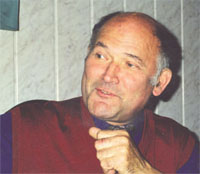
Памяти Бориса Матвеевича Кренделя (14.09.1935 – 24.05.2013)

11644

После тяжелой продолжительной болезни 24 мая 2013 года ушел из жизни Заслуженный врач Российской Федерации, главный научный сотрудник ФГБУ «НИИ урологии» Борис Матвеевич Крендель.

Борис Матвеевич родился 14 сентября 1935 года в г. Тбилиси. В 1957 году он поступил в Куйбышевский медицинский институт, который блестяще закончил в 1963 г

Сразу после окончания института Б.М. Крендель начал работать хирургом-урологом в Центральной больнице г. Мурома, став впоследствии заведующим урологическим кабинетом.

Стремление к более глубокому познанию своей специальности, желание приобрести не только практический, но и научный опыт привело Бориса Матвеевича Кренделя в 1967 году на кафедру урологии 2 Московского ордена Ленина Государственного медицинского института им. Н.И. Пирогова, возглавляемую академиком Н.А. Лопаткиным. На этой кафедре Борис Матвеевич окончил клиническую ординатуру и аспирантуру по урологии. После защиты в 1972 году кандидатской диссертации на тему: «Сравнительная оценка рентгено-радиологических методов определения стадий рака мочевого пузыря по данным клиникопатоморфологических исследований», стал работать в должности ассистента, а с 1982 года доцента кафедры.

При создании в 1980 году первого в стране научно-исследовательского института урологии Б.М. Крендель заслуженно вошел в число его организаторов.

С 1984 года стал заместителем директора по научной части, а затем в 1996 году заместителем директора по лечебной работе. В 2000 году Борис Матвеевич был назначен главным врачом, а в 2005 году – главным консультантом НИИ урологии.

Он был великолепным диагностом, человеком, обладающим удивительной врачебной интуицией. С больными он всегда был чутким и терпеливым, с коллегами – требовательным и непримиримым, если речь шла о защите интересов пациента.

Высокий профессионал, блестящий хирург и педагог, Б.М. Крендель воспитал и подготовил к самостоятельной работе практически всех врачей НИИ урологии и ординаторов, проходивших обучение в институте.

Светлая память о нем навсегда останется в сердцах его друзей, коллег, учеников и вылеченных им больных.

Коллектив Научно-исследовательского института урологии Минздрава России